

For most goods worth A$1,000 or less, there is no import tax at the Australian border: no duties, taxes or charges, with tobacco and alcohol the exceptions. Once a shipment is worth more than A$1,000, it needs a full import declaration, and you pay any customs duty and GST that apply, plus an import processing charge and a biosecurity charge, before the goods are released.
Goods you buy online from an overseas seller for A$1,000 or less can still carry GST, but the seller collects it at checkout rather than at the border.
Every one of those government charges can be worked out before the goods ship. This guide explains each, then works one sea shipment through, line by line.
General information only, not tax or legal advice. Every charge, rate and threshold comes from the ABF, ATO or DAFF page linked beside it; charges checked 13 November 2026.
Key points
- Over A$1,000, you need a full import declaration (Import Declaration, N10) and must pay any duty and GST that apply, plus the charges, before release (eligible businesses can defer the GST).
- Everything starts from the customs value: the price paid for the goods, without overseas freight and insurance, converted at the exchange rate on the day the goods were exported.
- GST is 10% of the customs value plus duty plus the cost of transporting and insuring the goods to Australia.
- Two flat charges apply on top: an import processing charge (A$50 or A$152 for most electronic declarations) and a biosecurity charge (A$48 by air, A$71 by sea since 1 July 2026).
- On an A$8,000 sea shipment at a 5% duty rate, with A$900 freight and insurance, the government lines come to A$1,451.
Listen to this guide (about 8 minutes)
Read the transcript
For most goods worth a thousand Australian dollars or less, there's nothing to pay at the Australian border. No duty, no tax, no charges. Tobacco and alcohol are the exceptions. Once a shipment is worth more than a thousand dollars, though, it needs a full import declaration, and you pay any customs duty and GST that apply, plus an import processing charge and a biosecurity charge, before the goods are released. If you buy something online from an overseas seller for a thousand dollars or less, it can still carry GST. The difference is that the seller collects it at checkout, not the border. Here's the useful part. Every one of those government charges can be worked out before your goods ship. So we'll go through each one, and then work a sea shipment through from start to finish. This is general information, not tax or legal advice, and the charges were checked on the 13th of November 2026. So what actually changes at the thousand dollar line? Three things. First, the declaration. Air or sea cargo worth a thousand dollars or less is usually cleared on what's called a Self-Assessed Clearance declaration. Above that, goods going into the Australian market need a full Import Declaration, which the Border Force calls an N10. It sets out what the goods are, who's importing them, how they travelled, their tariff classification and their customs value. Second, that declaration is what produces the bill. And third, payment comes first. The Border Force says you must pay all applicable duties, taxes and charges before the goods can be released. The declaration is lodged electronically in the Integrated Cargo System, or on a paper form at a Border Force counter. The Border Force also says it can't complete the declaration for you, and it encourages first-time or occasional importers to use a licensed customs broker. Now, the customs value. This is the number everything else is built on. For most commercial shipments, the customs value is the price you paid, or will pay, for the goods, without the freight and insurance from the place of export to Australia. Some costs the buyer pays before the goods leave, like local freight, packing, commissions and certain royalties, are added. That's why a broker checks the value against the contract and not just the invoice. If you paid in US dollars, yuan or any other currency, the value is converted to Australian dollars. And the date matters here. The Border Force uses the exchange rate on the day the goods were exported, not the day they arrive in Australia. So it's the rate when the goods left, not when they berth in Brisbane. Next, duty. For most goods, duty is a percentage of the customs value, and that percentage depends on how your goods are classified in the Customs Tariff. Two things can change it. One is where the goods come from, because goods from countries with a free trade agreement may get a lower preferential rate, as long as they genuinely qualify. The other is a concession, such as a Tariff Concession Order. So the classification is the first thing to check, ideally before you order. Then there's GST, and this is where people are often caught out. GST on imports isn't ten per cent of your invoice. It's ten per cent of something called the value of the taxable importation. That's the customs value, plus any duty, plus what you paid to transport and insure the goods to Australia, plus wine tax if the goods are wine. So the freight and insurance that were left out of the customs value come back in for GST, and you pay GST on the duty as well. GST is paid at the same time, and in the same way, as the duty. On top of duty and GST, there are two fixed charges. The first is the import processing charge. For a declaration lodged electronically, it's fifty dollars when the goods are worth more than a thousand and under ten thousand, and a hundred and fifty-two dollars at ten thousand or more. Paper declarations cost more: ninety dollars and a hundred and ninety-two dollars. The second is the biosecurity charge, which the Border Force collects for the Department of Agriculture, Fisheries and Forestry. Since the 1st of July 2026 it's forty-eight dollars for air cargo and seventy-one dollars for sea cargo. Before that it was forty-six and sixty-eight, so an older quote or calculator may still show the old figures. Now let's put it all together with one sea shipment. The inputs are set for the purpose: a customs value of eight thousand dollars, already converted at the right exchange rate. Nine hundred dollars of transport and insurance to Australia. And a duty rate of five per cent. Your own rate will depend on your goods. Duty is five per cent of eight thousand, which is four hundred dollars. The value of the taxable importation is eight thousand, plus four hundred, plus nine hundred, which comes to nine thousand three hundred dollars. GST is ten per cent of that: nine hundred and thirty dollars. Add the import processing charge of fifty dollars and the sea biosecurity charge of seventy-one dollars. The government total is one thousand four hundred and fifty-one dollars. For a bigger shipment, say fifteen thousand dollars with eleven hundred dollars of freight and insurance at the same rate, the processing charge moves up to a hundred and fifty-two dollars, and the government total comes to two thousand six hundred and fifty-eight dollars. By air, the only change in the fixed charges is the biosecurity charge, forty-eight dollars instead of seventy-one. Those government lines are fixed for a given shipment. But they're not the whole bill. The surest way to avoid a final invoice bigger than the quote is a quote that lists every line and says which ones can change. So what else can appear? If the Department of Agriculture directs your goods for inspection, it charges for the officer's time in fifteen minute blocks. Treatment, like fumigation, is a separate cost. Some goods also carry their own charges: luxury car tax on expensive cars, dumping duty on certain goods from certain exporters, excise-equivalent duty on alcohol, tobacco and fuel, and wine equalisation tax on wine. Storage can start if goods sit at the terminal or depot past the free time. Delivery from the wharf or airport is set by the carrier. And the broker's own fee is set by the broker. We can't change a Border Force or Agriculture charge, and we can't speed up an inspection. What we can do is lodge a declaration that's right the first time, and show you every line, theirs and ours, before you commit. A few questions come up a lot. Does shipping count towards the thousand dollars? Generally not. The line is applied to the customs value, which leaves out the overseas freight and insurance. Those costs do count towards GST once you're over the line. Can a business claim the GST back? The Tax Office says a GST-registered business that imports goods for its business may be able to claim a GST credit, as long as it imports the goods for a creditable purpose and keeps the finalised declaration and the matching receipt. There's also a deferred GST scheme for eligible importers. Whether either applies to you is a question for your accountant. Is there a legal way to pay less? Yes, by paying only what's owed. That means the right classification, a free trade agreement rate where the goods genuinely qualify, a concession where one exists, and a refund where the rules allow it. We've been clearing imports for over 20 years. If you'd like every line worked out before your goods land, send us your supplier's invoice through the quote form on our website, or give us a call on 07 3132 3935. Tell us what the goods are, their value and currency, where they're coming from, whether it's sea or air, and the bill of lading or air waybill number, and we'll come back with a written quote.
What changes when your goods are worth more than $1,000
The Australian Border Force (ABF) sets the line plainly: "For goods with a value over AUD1,000 you must pay all relevant duties, taxes and other charges, including an import processing charge" (ABF, Import declarations, read 13 November 2026).
Three things change at that point.
- A different declaration. Goods worth A$1,000 or less coming by air or sea cargo are usually cleared on a Self-Assessed Clearance (SAC) Declaration. Goods with "a combined value of over AUD1,000" being cleared into home consumption need a full Import Declaration (N10). It tells the ABF what the goods are, who is importing them, how they travelled, their tariff classification and their customs value.
- Duty, GST and charges are assessed. The declaration is what produces the bill.
- Payment comes first. In the ABF's words, "You must pay all applicable duties, taxes and charges before the goods can be released."
The declaration is lodged electronically in the Integrated Cargo System, or on paper at an ABF counter on form B650. The ABF also says "The ABF can not complete the Import Declaration for you," and it encourages first-time or infrequent importers to use a licensed customs broker.
Customs value: the number everything else is built on
Duty and GST are both worked out from the customs value, so get this number right first.
For most commercial shipments, the customs value is the price you actually paid or will pay for the goods, without the cost of freight and insurance from the place of export to Australia. The ATO puts it in one line: "The customs value is the price the goods are sold for, minus freight and insurance from the place of export" (ATO, GST on low value imported goods). Some costs the buyer pays before the goods leave the place of export are added, such as foreign inland freight, packing, commissions and certain royalties or licence fees (ABF, Trade and goods compliance). That is why a broker checks the value against the contract and not just the invoice.
If you paid in US dollars, yuan or any other currency, the value is converted to Australian dollars, and the date matters. The ABF says foreign currency "must be converted into Australian currency at the rate of exchange prevailing on the day of export of the goods (not on the day the goods arrive in Australia)" (ABF, Exchange rates). The rate is set under section 161J of the Customs Act 1901. So the rate that counts is the one on the day the goods were exported, not the day they berth in Brisbane.
Duty: the rate comes from your goods' classification
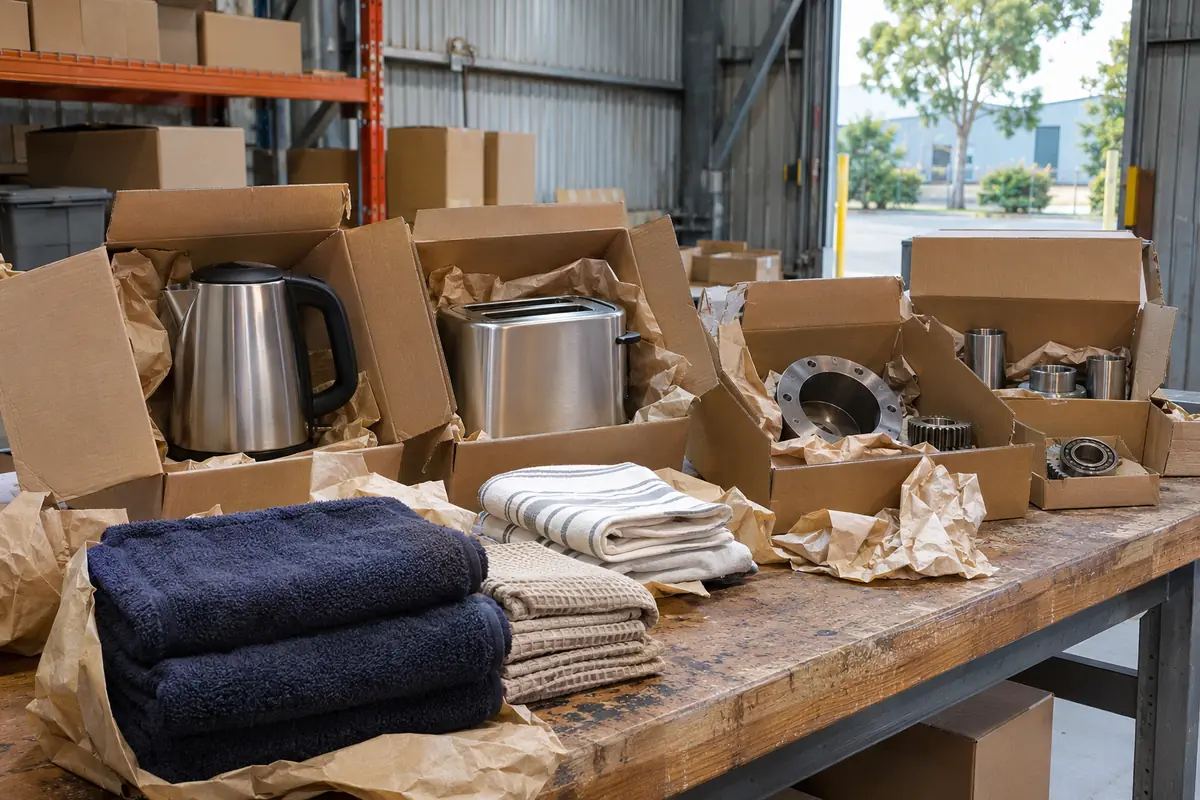
For most goods, customs duty is a percentage of the customs value, and the percentage depends on how the goods are classified in the tariff. Rates of duty sit in Schedule 3 of the Customs Tariff Act 1995, listed against each tariff classification (ABF, Current tariff classification).
Two things can move the rate:
- Where the goods come from. Schedule 1 lists the countries and places whose originating goods may receive a preferential rate of duty, which is how free trade agreements work at the border. The goods have to qualify, and the claim has to be supported.
- Concessions. The ABF says goods are liable for duties and taxes "unless an exemption or concession applies" (ABF, Cost of importing goods). A Tariff Concession Order is one example.
Because the rate follows the classification, the classification is the first thing to check. If you are not sure where your goods sit, a tariff classification check before you order saves fixing a declaration after it is lodged.
GST: 10% of more than the price you paid
GST on imports is not 10% of your invoice. It is 10% of the value of the taxable importation, which the ABF defines as the sum of:
- the customs value of the goods
- any duty payable
- "the amount paid or payable to transport the goods to Australia and to insure the goods for that transport"
- any wine equalisation tax, if the goods are wine
(ABF, GST and other taxes when importing)
So the overseas freight and insurance that were left out of the customs value come back in for GST, and GST is also charged on the duty. The ATO describes the same sum and adds that GST is "payable at the same time, at the same place, and in the same manner" as customs duty, unless you are in the deferred GST scheme (ATO, GST and imported goods).
Some goods are non-taxable importations, for example goods that would be GST-free if sold in Australia, such as basic food, and goods returned unaltered with unchanged ownership.
The two flat charges: import processing and biosecurity
A full import declaration also carries two fixed charges, neither of which depends on the duty rate.
The import processing charge is the ABF's fee for processing the declaration. It depends on the value of the consignment and on whether the declaration is lodged electronically or on paper. The biosecurity charge (the full import declaration charge) is collected by the ABF on behalf of the Department of Agriculture, Fisheries and Forestry (DAFF), and depends on whether the goods came by air or sea.
| Charge (Full Import Declaration) | Amount |
|---|---|
| Import processing charge, electronic, over A$1,000 and under A$10,000 | A$50.00 |
| Import processing charge, electronic, A$10,000 or more | A$152.00 |
| Import processing charge, documentary (paper), over A$1,000 and under A$10,000 | A$90.00 |
| Import processing charge, documentary (paper), A$10,000 or more | A$192.00 |
| Biosecurity charge, air cargo | A$48.00 |
| Biosecurity charge, sea cargo | A$71.00 |
Sources: ABF, Import Processing Charges and Australian Customs Notice 2026/23, both read 13 November 2026.
The biosecurity charge rose on 1 July 2026, from A$46 to A$48 for air and from A$68 to A$71 for sea (DAFF, Fees and charges 2026-27). It only applies to goods with a customs value over A$1,000 (Australian Customs Notice 2026/23). An older quote or calculator may still use the old figures.
Two smaller points. Goods going into a licensed warehouse before duty is paid are entered on a Warehouse Declaration (N20), which carries the same processing charge as a full import declaration. When they later leave the warehouse for home consumption, the out-of-warehouse Import Declaration (N30) carries its own charge of A$23 electronic or A$63 documentary. And a long format SAC Declaration, used for some goods at A$1,000 or less that need a permit, looks similar to a full declaration, but the ABF says "the import processing charge is not applied" to it.
Want every line worked out before your goods land? Send us the supplier's invoice and we will come back with a written quote that lists each government charge and our own fee separately.
On the quote form, use the Message box to tell us what the goods are, their value and currency, where they come from, sea or air, and the bill of lading or air waybill number.
Or call (07) 3132 3935.
One sea shipment worked through
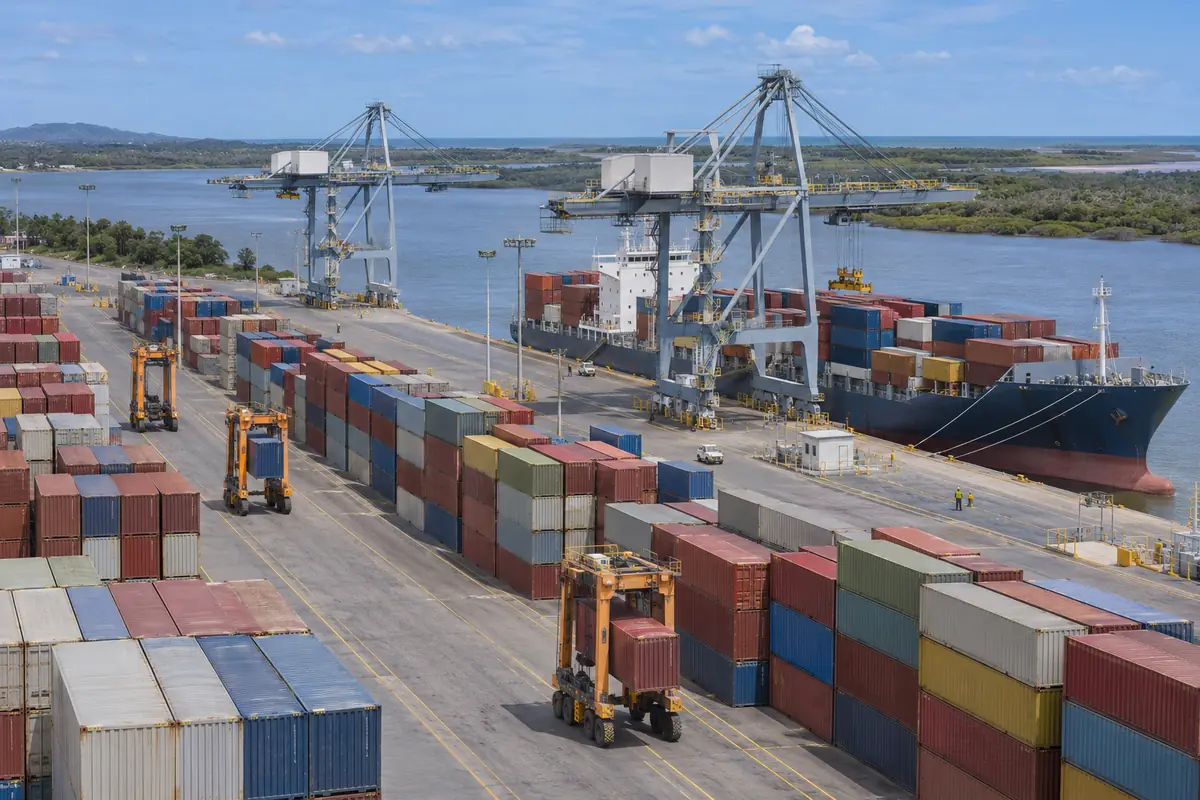
Here is a shipment with stated inputs, using the official charges above. It arrives by sea, the declaration is lodged electronically, and the goods carry a 5% duty rate. Your own rate depends on your goods' classification and origin, so treat the 5% as an input, not a rate for any particular product.
- Customs value (already converted at the day-of-export rate): A$8,000
- Overseas transport and insurance to Australia: A$900
- Duty rate: 5%
| Line | Amount |
|---|---|
| Duty: 5% of A$8,000 | A$400 |
| Value of the taxable importation: A$8,000 + A$400 + A$900 | A$9,300 |
| GST: 10% of A$9,300 | A$930 |
| Import processing charge (electronic, under A$10,000) | A$50 |
| Biosecurity charge (sea) | A$71 |
| Government total: A$400 + A$930 + A$50 + A$71 | A$1,451 |
You can use the same rows like a calculator for your own invoice: swap in your customs value, your freight and insurance, and your duty rate, then work down the lines in order.
A larger shipment changes one band. At a customs value of A$15,000 with A$1,100 of transport and insurance and the same 5% rate, duty is A$750, the value of the taxable importation is A$16,850 (A$15,000 + A$750 + A$1,100), and GST is A$1,685. The import processing charge moves up to A$152 because the value is A$10,000 or more, and the sea biosecurity charge stays at A$71. The government total is A$2,658.
By air, the only change in the flat charges is the biosecurity charge: A$48 instead of A$71. Our air freight clearance page covers what else differs at the airport.
For a sea shipment, having us lodge the declaration for your container or LCL cargo means the classification, value and charges can be worked out before the ship arrives, so the money side is not what keeps the goods waiting.
Government charges and everything else on the bill
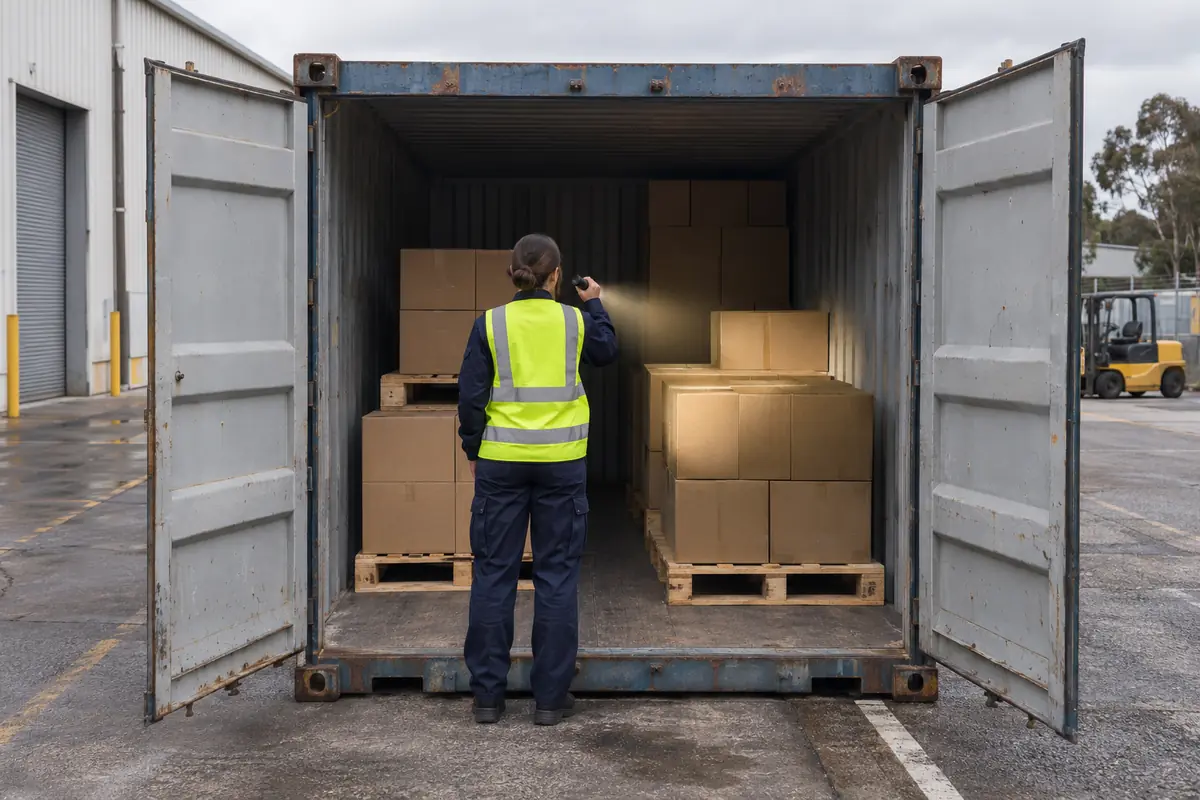
The government lines above are fixed by law for a given shipment. They are only part of what a clearance bill can include. The surest way to avoid a final invoice bigger than the quote is a quote that lists every line and says which ones can change.
| Line on the bill | Who sets it |
|---|---|
| Customs duty | The Customs Tariff, by classification and origin |
| GST | Law: 10% of the value of the taxable importation |
| Import processing charge | ABF schedule, by value band and lodgement type |
| Biosecurity charge | DAFF, collected by the ABF, air or sea |
| Luxury car tax, dumping duty, excise-equivalent duty or wine equalisation tax, only for some goods | ATO, ABF and the Customs Tariff |
| Biosecurity inspection, only if directed | DAFF schedule, charged for officer time |
| Treatment such as fumigation, only if directed | The treatment provider |
| Import permit application, only if your goods need a DAFF permit | DAFF schedule |
| Port or depot storage, only if goods wait | The terminal or depot |
| Delivery from the wharf or airport | The carrier |
| Broker's fee | The broker, quoted up front |
Inspection time. If DAFF directs the goods for inspection, it charges for the officer's time in 15-minute units. Under its 2026-27 schedule, that is A$42 per 15 minutes per person for in-office work in ordinary hours and A$70 per 15 minutes per person for out-of-office work in ordinary hours, with higher rates outside ordinary hours (DAFF, Fees and charges 2026-27). If your goods need a DAFF import permit, the same schedule charges A$135 for the application plus an assessment fee of A$82 to A$655, depending on the permit's assessment category, with time charges if the assessment runs long. Any treatment, such as fumigation, is a separate cost. Our quarantine clearance page explains how the biosecurity side runs.
Charges that apply only to some goods. Four more charges can apply, depending on what you import:
- Luxury car tax: cars with a luxury car tax value over the threshold (A$80,809, or A$91,661 for fuel-efficient vehicles, in 2026-27) attract luxury car tax of 33% on the amount over it (ATO, Luxury car tax rate and thresholds).
- Dumping and countervailing duty: some goods from particular countries or exporters carry these on top of customs duty, at the rate in the Dumping Commodity Register, even under a free trade agreement (ABF, Dumping and countervailing duties).
- Excise-equivalent duty: beer, spirits, tobacco and fuel pay customs duty by quantity, for example per litre of alcohol or per stick of tobacco, at rates updated by customs notice (ACN 2026/30 for alcohol and fuel from 3 August 2026; ACN 2026/32 for tobacco from 1 September 2026).
- Wine equalisation tax: imported wine also attracts wine equalisation tax, which the ABF says is generally payable at the time of importation and which is added into the value for GST (ABF, GST and other taxes; ATO, Wine equalisation tax).
Storage and delivery. Storage can start when goods sit at the terminal or depot longer than the free time allowed, which is why documents ready before arrival matter. We can also arrange cartage from the wharf or airport so clearance and delivery are booked together.
The broker's fee. Brokers set their own fees, so there is no standard figure to quote here. We give ours up front in the written quote, as its own line.
We cannot change an ABF or DAFF charge or speed up an inspection. What we can do is lodge a declaration that is right the first time and show you every line, government and ours, before you commit.
Frequently asked questions
Do I pay import tax on goods under $1,000?
For most goods, no. The ABF says "For most goods with a value of AUD1,000 or less there are no duties, taxes or charges to pay," except goods like tobacco, tobacco products and alcoholic beverages. If you buy online from an overseas seller registered for Australian GST, the seller charges GST at checkout instead. One catch from the ATO: if several low value items are shipped together in one consignment with a total customs value over A$1,000, the goods are taxed at the border instead.
Does the shipping cost count towards the $1,000?
Generally not. The line is applied to the customs value, which leaves out freight and insurance from the place of export. Those costs do count towards GST once a shipment is over the line.
What is a Self-Assessed Clearance declaration?
It is the declaration for air or sea cargo valued at A$1,000 or less (ABF, Import declarations). It cannot be used for goods arriving by mail or under a carnet. There are three types: a Cargo Report SAC made by the cargo reporter, a short format SAC and a long format SAC. If your goods need a permit, you must use either a full Import Declaration (N10) or a long format SAC, and the import processing charge is not applied to the long format SAC.
Which exchange rate is used?
The rate on the day the goods were exported, not the day they arrived. The ABF loads daily rates for 28 selected currencies into the Integrated Cargo System.
When do I have to pay, and can the goods be released first?
Duty, GST and charges are paid before release: the ABF will not release the goods until everything assessed on the declaration has been paid. GST is paid at the same time and in the same way as duty. The ATO runs a deferred GST scheme that lets eligible importers pay the GST through their monthly business activity statement instead; it requires an ABN, GST registration and monthly reporting, among other conditions.
Can a business claim the GST back?
The ATO says a GST-registered business that imports goods as part of its activities "may be able to claim a GST credit" for the GST paid, if it imports the goods for a creditable purpose and holds the finalised import declaration and the matching receipt. Whether that applies to you is a question for your accountant or tax adviser.
Is there a legal way to pay less?
Yes, by paying only what is owed. That means the correct tariff classification, a preferential rate where the goods genuinely qualify under a free trade agreement, a concession such as a Tariff Concession Order where one exists for your goods, and a refund where the rules allow one. Undervaluing or misdescribing goods is not; the ABF says importers may face financial penalties or legal action if they do not pay the correct duties and taxes.
Can I lodge the declaration myself?
You can. Importers can apply for access to the Integrated Cargo System, though the ABF notes there are costs involved, or lodge on paper at an ABF counter, which attracts the higher documentary processing charge. The ABF will only give general advice on how to complete a declaration. For first or occasional imports, the ABF points people towards a licensed customs broker.
Get the whole bill before your goods arrive
Duty, GST, the import processing charge and the biosecurity charge can all be worked out from the invoice, the freight cost and the classification before your goods leave the supplier.
We have been clearing imports for over 20 years. You can find us on Google Maps.
Send us your invoice for a written quote. Every government charge and our fee, each on its own line.
On the quote form, use the Message box to tell us what the goods are, their value and currency, where they come from, sea or air, and the bill of lading or air waybill number.
Or call (07) 3132 3935.